Ingredient Comparison
Monolaurin vs. Lysine:What’s the Difference?
Lysine and monolaurin often show up in the same lip-care conversations, but they are not the same thing. This guide compares them by source, form, research, and use — without declaring a winner.
The Amino Acid
What Is Lysine, and Why Is It Popular for Lip Care?
Lysine is an amino acid your body gets from foods such as meat, fish, dairy, legumes, and some soy products. It is also sold as an oral supplement, lip balm, and ointment. People associate it with cold sore care because of its relationship with arginine — but that theory is a starting point, not proof that a product works. Research on oral L-lysine has been mixed and dose-dependent, and lysine balms and ointments have much less direct evidence behind them.
- An amino acid obtained from food
- Sold as supplements, balms, and ointments
- Human research is mixed and dose-dependent
The Lipid
What Is Monolaurin?
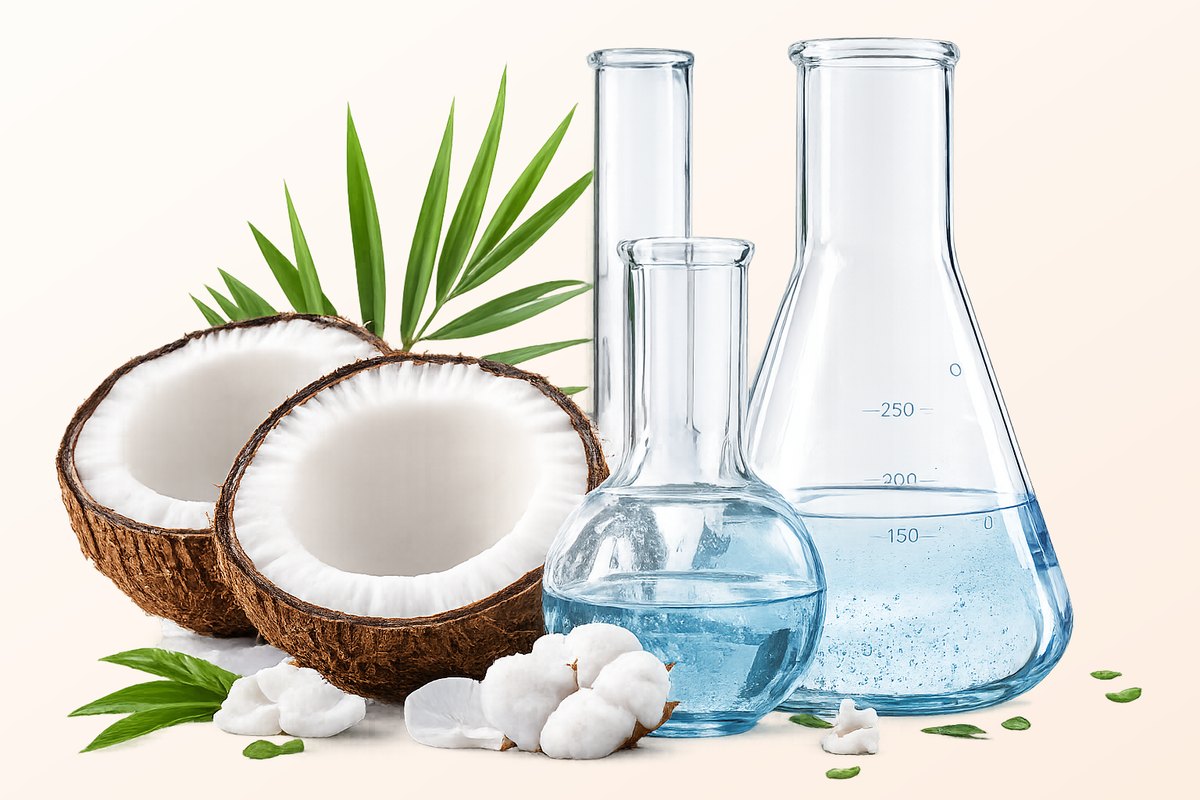
Monolaurin, also called glycerol monolaurate, forms when lauric acid combines with glycerol. That lauric acid often comes from coconut — but monolaurin itself is not coconut oil, nor is it lysine. It comes as oral supplements and as topical products like serums and gels. Laboratory researchers have looked at how it interacts with microorganisms, membranes, and biofilms, but those are lab findings and do not prove that a finished cosmetic treats cold sores or infections.
- A monoester of lauric acid and glycerol
- Available as supplements and topical serums
- Studied mainly in laboratory settings
Side by Side
How Do Monolaurin and Lysine Compare?
They differ in chemical type, natural sources, available forms, research base, and intended uses. The table lays out the factual differences.
Oral and topical products are not interchangeable, and neither ingredient is simply “better” — they do different jobs and rest on different evidence.
A fair comparison
- Oral and topical products are not interchangeable.
- Research on an ingredient does not prove that every finished product made with it works.
- Neither one is simply “better” — they do different jobs and rest on different evidence.
Using Them Together
Can You Use Monolaurin and Lysine Together?
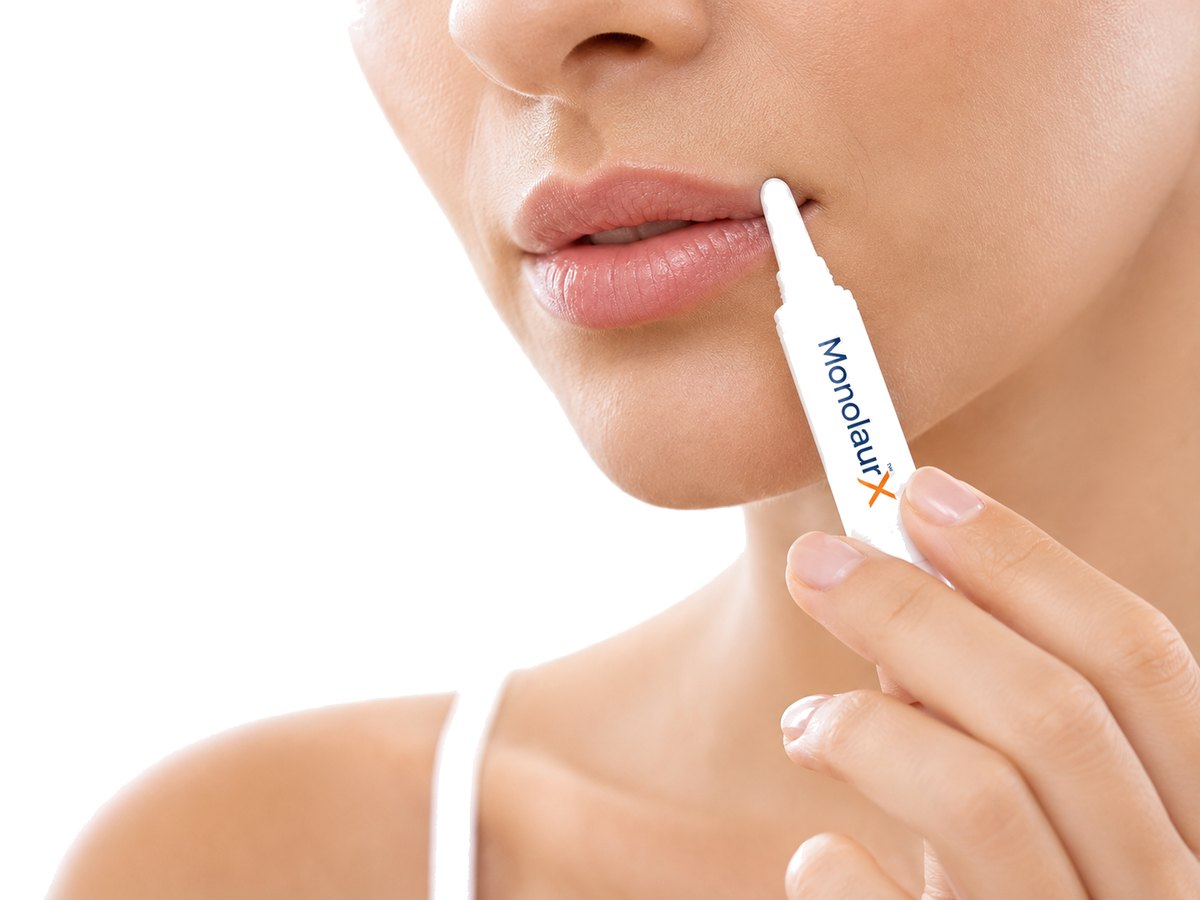
There is no general rule that says you should use them together, and MonolaurX does not contain lysine anyway. Applying a topical serum is a different thing from swallowing a supplement, so there is no reason to expect them to work together in any special way. The simplest approach is to follow each product’s own label.
- If you try both, add them one at a time
- Layering can change feel, absorption, and how skin reacts
- Consider allergies, medications, and conditions
- Check with a professional before adding supplements
Where It Fits
Where Does MonolaurX™ Fit?
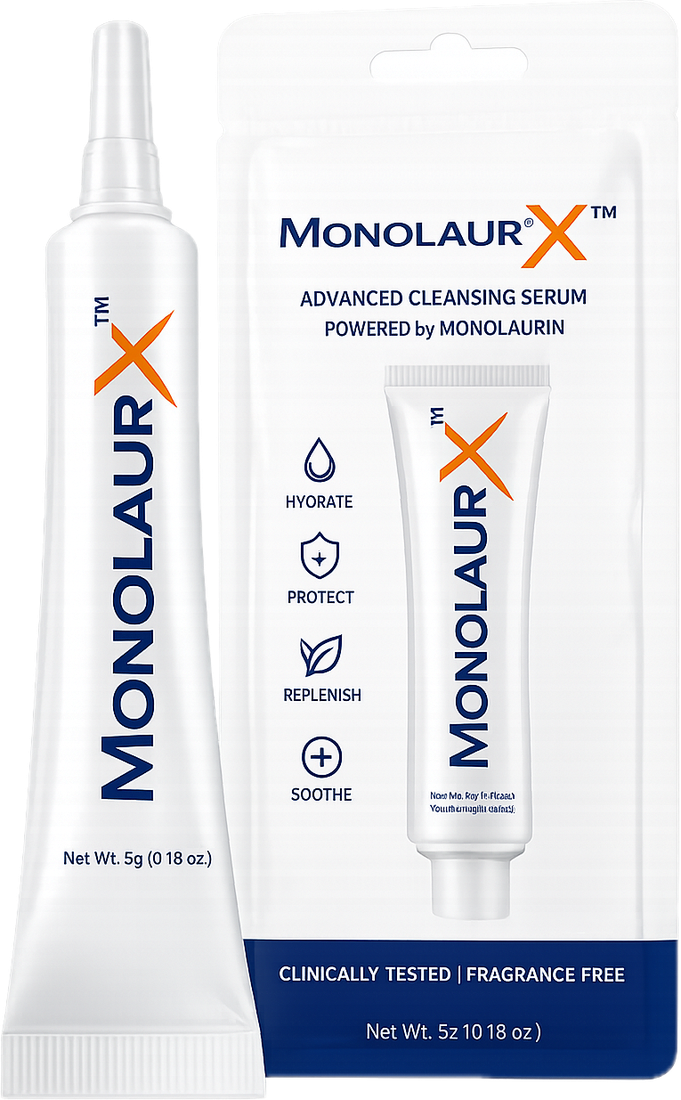
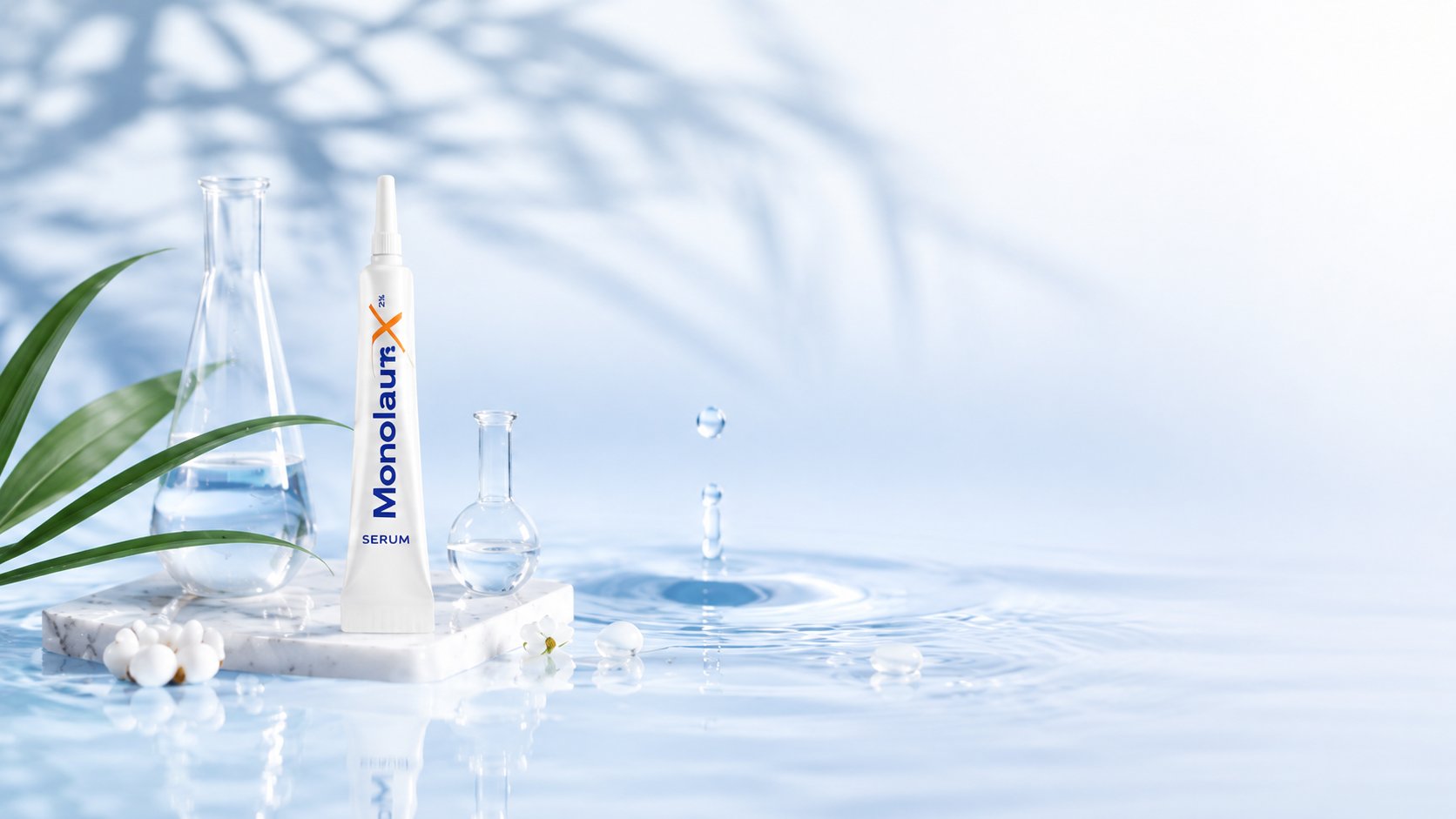
In this comparison, MonolaurX sits on the monolaurin side. It is a topical cosmetic cleansing serum formulated with coconut-derived glycerol monolaurate, supported by verified ingredient documentation. It is applied to the skin, not taken by mouth, and it contains no lysine. It is not meant to replace dietary lysine, and it is not an over-the-counter cold sore medicine.
- Applied to skin, not taken by mouth
- Made around glycerol monolaurate
- Contains no lysine
- Not an OTC cold sore medicine
Our Sources
References
-
1
(2017). Lysine for herpes simplex prophylaxis: A review of the evidence. Integrative Medicine, 16(3), 42–46
pubmed.ncbi.nlm.nih.gov/30881246/ -
2
(2015). Non-aqueous glycerol monolaurate gel exhibits antibacterial and anti-biofilm activity against Gram-positive and Gram-negative pathogens. PLOS ONE, 10(3), e0120280
doi.org/10.1371/journal.pone.0120280