Cold Sore Patches and Bandages: How They Work
A cold sore patch is a small adhesive covering that protects a cold sore while the skin heals. Most use hydrocolloid material, which absorbs moisture and creates a barrier over the affected skin. That extra layer can also discourage touching or picking. A patch does not cure herpes simplex virus, or HSV, and covering a sore does not make it noncontagious.
MonolaurX Editorial TeamPublished

On this page
A cold sore patch is a small adhesive covering that protects a cold sore while the skin heals. Most use hydrocolloid material, which absorbs moisture and creates a barrier over the affected skin. That extra layer can also discourage touching or picking. A patch does not cure herpes simplex virus, or HSV, and covering a sore does not make it noncontagious.
Medicated creams serve a different purpose and may contain ingredients used for symptom management. Looking at different cold sore care options can make those differences easier to understand.
What Hydrocolloid Patches Do
Hydrocolloid cold sore patches create a protective covering that absorbs moisture and reduces contact with the affected skin.
Hydrocolloid dressings contain materials that absorb wound fluid and form a soft gel. This helps maintain a moist, protected surface rather than leaving the sore exposed to repeated rubbing. The same material is widely used in wound dressings.
On a weeping blister, the patch can absorb some of the fluid while limiting contact from fingers, masks, or other surfaces. It may also make the sore less noticeable. A cold sore healing patch sometimes turns white or cloudy after absorbing fluid. That change can be a normal part of how hydrocolloid material works.
Wear time and application instructions vary by brand, so check the label before use. Some patches are simple hydrocolloid coverings and contain no medicine. They protect the surface, but they do not remove HSV from the body.
Can I Put a Pimple Patch on a Cold Sore?
A plain hydrocolloid pimple patch may use similar material, but a patch made and labeled for cold sores is the safer choice. Acne patches are made for pimples, not the delicate skin around the lips. Some also contain salicylic acid, benzoyl peroxide, tea tree oil, or other ingredients that could irritate that area. Shape matters too. A small acne patch may not stay in place when talking or eating. Never put any patch inside the mouth.
When People Reach for a Patch
People often use a cold sore patch to protect the lesion, reduce touching, or cover it during everyday activities.
Common reasons include:
-
The blister is weeping and needs surface moisture management.
-
A mask or another surface keeps rubbing against the area.
-
Picking or touching the sore is hard to avoid.
-
The person wants a less noticeable covering.
-
Lip movement during eating or speaking causes friction.
-
The product label recommends use at the current stage.
Wash and dry the hands before applying a patch, then wash again afterward. Replace the patch as directed on the label, or sooner if it loosens or becomes saturated.
A cold sore lip patch is still only a covering. Cold sores remain contagious until fully healed, so a patch does not make kissing or oral sex safe.
Patches vs Creams
Cold sore patches mainly cover and protect the lesion, while medicated creams deliver ingredients intended for a labeled treatment purpose.
|
Feature |
Hydrocolloid Patch |
Medicated Cream |
|
Main purpose |
Covers and protects the lesion |
Delivers a topical medicine |
|
Physical barrier |
Yes |
No |
|
Helps reduce touching |
Yes |
Limited |
|
Application |
Worn for the labeled period |
Reapplied according to directions |
|
Antiviral action |
Usually no |
Some contain antiviral medication |
|
Practical use |
Coverage and moisture management |
Symptom or treatment use listed on the label |
The two formats are not interchangeable. A patch focuses mainly on protection and moisture control. A medicated cream may have a specific treatment purpose listed on its label.
Do Cold Sore Patches Heal Sores Faster Than Creams?
Evidence does not support a broad claim that patches always heal cold sores faster than creams. Products, ingredients, and study methods vary. One randomized study compared a specific hydrocolloid patch with 5% acyclovir cream and found no significant difference in median healing time: 7.57 days with the patch versus 7.03 days with the cream. That result applies to the products tested, not every patch or cream sold today.
What Is the Best Cold Sore Patch?
The best cold sore patch is designed for the lips, fits the lesion, feels comfortable, and provides clear directions. Look for cold-sore-specific labeling, a suitable size, clearly listed ingredients, a comfortable adhesive, individual packaging, and simple replacement instructions. Check the ingredient list if certain adhesives or skincare ingredients have irritated you before. Use a patch that fits the area and can be worn as directed.
Using a Patch With Other Lip Care
Combine a cold sore patch only with creams, serums, lip balm, or makeup when the product labels allow it. Patches generally stick better to clean, dry skin. Balm, cream, or serum underneath can interfere with the adhesive.
Some patch labels may allow makeup on top of the covering. Avoid putting makeup directly on an uncovered sore, and do not reuse contaminated lip products or applicators. A pharmacist can also advise on combining a patch with docosanol, acyclovir, or another medicated product.
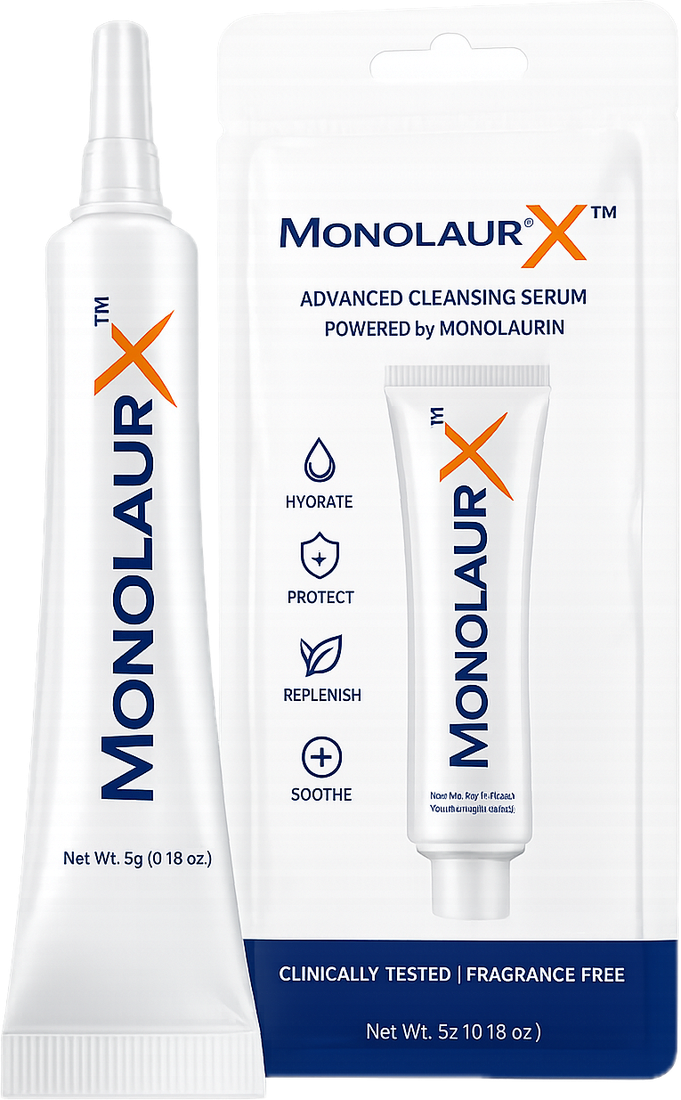
MonolaurX is a cosmetic cleansing serum for lip-area skincare, not a cold sore treatment. Do not place it beneath a patch unless both labels support that use. Read more about how MonolaurX works.
What Patches Can’t Do
Cold sore patches cannot cure HSV, guarantee faster healing, or completely prevent the virus from spreading.
-
They cannot remove HSV from the body or prevent future outbreaks.
-
They cannot promise a set healing time.
-
They do not make a covered cold sore noncontagious.
-
They cannot replace medical care for severe or unusual symptoms.
-
They should not be used simply to hide a lesion that has not been identified.
Does Covering a Cold Sore Stop It From Spreading?
No. A patch may reduce direct contact with the lesion, but it does not eliminate the risk of spreading HSV. Wash your hands after touching the area and avoid kissing or oral sex until the cold sore has completely healed. Do not share lip products, cups, or items that contact the mouth during an outbreak. Kissing a newborn while a cold sore is active should also be avoided because neonatal herpes can be serious.
When Should Someone Seek Medical Advice?
Most cold sores clear without medical treatment, but some symptoms deserve professional advice. NHS guidance recommends seeking medical help if a cold sore has not started healing within about 10 days, is very large or painful, or appears in someone with a weakened immune system.
Medical advice is also appropriate if the sore is near the eye, outbreaks keep returning, the diagnosis is uncertain, or a patch causes swelling, irritation, or worsening discomfort.
Frequently Asked Questions
Can I Put a Pimple Patch on a Cold Sore?
A cold-sore-specific patch is usually a better choice because some acne patches contain ingredients that may irritate lip-area skin.
How Long Should You Wear a Cold Sore Patch?
Wear the patch for the amount of time listed on the product label and replace it as directed.
Does a Cold Sore Patch Make the Sore Less Contagious?
No, a patch can reduce direct contact but does not eliminate the risk of spreading HSV.
Can You Use Cream Under a Cold Sore Patch?
Only use cream under a patch if both product labels say the products can be combined.
What Should You Look for in the Best Cold Sore Patch?
Choose a patch made for cold sores that fits well, feels comfortable, and has clear ingredients and wear instructions.
Try MonolaurX for Simple Lip-Area Care
If you want to add a gentle cleansing step to your lip-area routine, you can use MonolaurX as a cosmetic cleansing serum for stressed skin around the lips. It is not a cold sore treatment, but it can fit into a broader skincare routine focused on cleanliness and everyday care.
Use it as directed, especially if you are also using patches, creams, or other topical products. Keeping each product’s role clear can make your routine easier to manage. Explore MonolaurX to see whether it fits how you care for the skin around your lips.
References
-
Karlsmark, T., Goodman, J. J., Drouault, Y., Lufrano, L., Pledger, G. W., & Cold Sore Study Group (2008). Randomized clinical study comparing Compeed cold sore patch to acyclovir cream 5% in the treatment of herpes simplex labialis. Journal of the European Academy of Dermatology and Venereology : JEADV, 22(10), 1184–1192. https://doi.org/10.1111/j.1468-3083.2008.02761.x
-
Nowak, M., Mehrholz, D., Barańska-Rybak, W., & Nowicki, R. J. (2022). Wound debridement products and techniques: clinical examples and literature review. Postepy dermatologii i alergologii, 39(3), 479–490. https://doi.org/10.5114/ada.2022.117572
-
O'Brien, J. J., & Campoli-Richards, D. M. (1989). Acyclovir. An updated review of its antiviral activity, pharmacokinetic properties and therapeutic efficacy. Drugs, 37(3), 233–309. https://doi.org/10.2165/00003495-198937030-00002
-
Ocampo, J. V., França, F. A., Santana, R. S., Lia, É. N., Reis, T. M. D., & Lima, R. F. (2024). Clinical guidelines for herpes labialis: recommendations and quality evaluation according to AGREE II. Acta odontologica latinoamericana : AOL, 37(1), 13–24. https://doi.org/10.54589/aol.37/1/13
This article is for general education and is not medical advice. MonolaurX is a cosmetic cleansing serum and is not intended to diagnose, treat, cure, or prevent any disease. Talk with a healthcare professional about symptoms or treatment.