Cold Sore vs. Pimple on Lip: How to Tell Them Apart
MonolaurX Editorial TeamPublished · Updated

On this page
Cold sore vs. pimple on lip can be confusing because they look similar. A cold sore develops from HSV (herpes simplex virus), while a pimple forms when pores clog or become inflamed. Tingling or burning often comes before a cold sore blister, while pimples usually appear as raised, tender bumps.
Early bumps can look alike, so appearance alone may not confirm the cause. MonolaurX has a cosmetic role in daily lip cleansing. Comparing how a bump feels, where it appears, and how it changes helps you choose appropriate care.
Cold Sore vs. Pimple on Lip: What Are the Main Differences?
Cold sores typically form fluid-filled blisters, while acne often produces a solid bump or a white tip on nearby skin. Use these differences as a quick reference, because individual bumps can look similar.
|
Feature |
Cold Sore |
Pimple on Lip |
|---|---|---|
|
Appearance |
Small fluid-filled blisters, often clustered |
Usually a raised bump; may have a white tip |
|
Location |
Lips or surrounding skin |
Skin beside the lip line |
|
Early Symptoms |
Tingling, burning, or itching may occur |
Localized tenderness, swelling, or redness |
|
Cause |
Herpes simplex virus |
Clogged or inflamed hair follicles |
|
Contagious |
Can spread HSV |
Ordinary acne is not contagious |
|
Healing |
Many recurring sores heal in 1–2 weeks |
Varies with the type and depth of the spot |
|
Treatment |
Antiviral medicine may help |
Suitable acne treatment may help |
Pimple vs. Cold Sore: What Do the Early Stages Look Like?
An early-stage pimple vs. cold sore comparison may reveal tingling before a blister or tenderness around an inflamed pore. Both can start as red bumps, so symptoms before the bump appears and the changes afterward can provide useful clues.
What Are the First Signs of a Cold Sore?
Tingling, burning, itching, or stinging near the lip can signal a cold sore. Small bumps may then become fluid-filled blisters, often in the same general area as previous outbreaks. Some outbreaks come on without warning, so the absence of a tingle does not rule out herpes.
What Does a Pimple Look Like When It First Appears?
A developing pimple often looks like a small, swollen spot that feels tender to the touch. It may stay red or develop a white or yellow tip, and it can appear on the skin beside the upper or lower lip. Acne, not HSV, causes this inflammation.

How Can You Tell If a Lip Bump Is a Cold Sore or Pimple?
To compare a lip pimple with a cold sore, look at appearance, location, and sensation together. These clues can guide next steps, but they cannot confirm the cause.
-
Appearance: Fluid-filled blisters favor a cold sore; an inflamed pore or whitehead favors acne.
-
Location: Cold sores can affect the red lip surface, while ordinary acne forms on the surrounding skin.
-
Sensation: Tingling before a blister suggests herpes; tenderness around a pore can suggest a pimple.
A single cold sore blister can resemble acne, and both can hurt. Have an uncertain bump assessed rather than choosing treatment based on a photo alone.
What Causes Cold Sores and Pimples around the Lips?
HSV-1 (herpes simplex virus type 1) usually causes cold sores, while clogged hair follicles cause acne. The virus remains in the body, and illness, stress, or sun exposure can trigger another outbreak.
The National Institutes of Health explains that oil and dead skin cells can block hair follicles and lead to acne. Certain lip products may clog nearby pores, while sweat and friction may aggravate breakouts around the mouth, but a bump does not automatically mean poor hygiene.
Are Cold Sores Contagious While Lip Pimples Are Not?
Cold sores can spread HSV through close contact with infected skin or saliva, while ordinary acne isn't contagious. HSV can also spread when no visible sore is present. Avoid kissing and oral sex from the first suspected outbreak symptoms until the sore fully heals.
How Do You Treat a Cold Sore vs. a Pimple on Your Lip?
Care for a lip pimple vs. a cold sore differs because acne medicines and antiviral medicines target different causes. Identify whether a bump is a cold sore before applying a product that could irritate the area or leave the actual cause untreated.
What Treatments Help with Cold Sores?
Prescription antivirals such as acyclovir and valacyclovir can reduce symptoms and help cold sores heal sooner. Treatment generally works best when started at the first warning signs. A cool compress can ease discomfort, and leaving blisters alone helps prevent the skin from reopening.
Discuss medical options for managing cold sores with a clinician. If you are considering supplements, review what the evidence says about lysine instead of assuming it works like an antiviral medicine.
How Do You Treat a Pimple Near Your Lip?
Benzoyl peroxide or salicylic acid may help an acne pimple on appropriate external skin near the lip. These ingredients work on acne and are not treatments for HSV. Gentle cleansing and avoiding squeezing can also help you prevent further irritation.
Keep acne medicines off the red lip surface and out of the mouth, and follow the product label. Labels for both benzoyl peroxide and salicylic acid products warn against contact with the lips and mouth.
When Should You See a Doctor about a Bump on Your Lip?
See a clinician if the cause is unclear, the pain is severe or worsening, or a sore doesn't improve after about 10 days. Frequent outbreaks or a weakened immune system also warrant medical advice. Persistent bumps may need assessment for causes other than acne or herpes.
Eye pain, redness, light sensitivity, or vision changes need prompt medical assessment. When herpes is suspected, a clinician may take a swab from an active blister or sore to test for HSV.
Frequently Asked Questions
Can a cold sore start as a single pimple?
A cold sore can start as a single bump that resembles a pimple, but it is a herpes lesion, not acne that changes into herpes.
How can you tell if a bump on your lip is herpes or acne?
Tingling followed by fluid-filled blisters suggests herpes, while an inflamed pore or whitehead on nearby skin suggests acne, though uncertain bumps need medical assessment.
Does a cold sore have a whitehead?
A cold sore doesn't form an acne whitehead, though blister fluid or crust can look pale, so color alone cannot confirm the cause.
Can you get a regular pimple directly on your lip?
Ordinary acne forms on the skin beside the lip line rather than the red lip surface, so a bump directly on that surface may have another cause.
Should you pop a pimple or blister on your lip?
Leave both pimples and blisters alone because squeezing can damage healing skin, increase irritation, or cause scarring, and touching a cold sore can transfer HSV.
Keep Your Lips Clean and Refreshed with MonolaurX
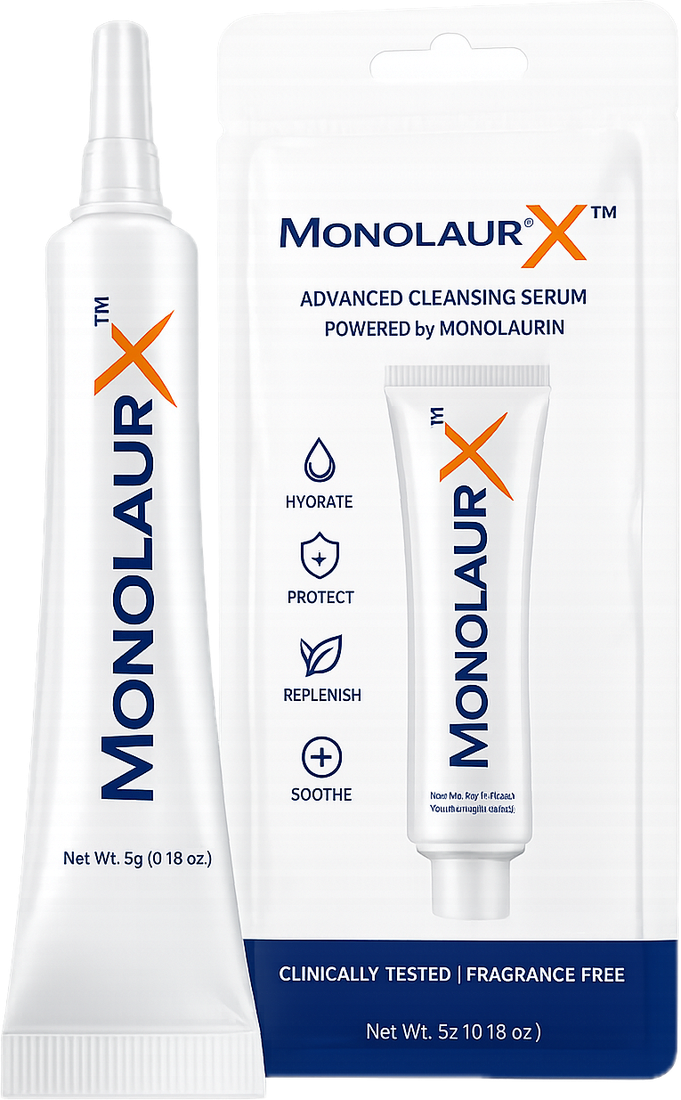
MonolaurX is a fragrance-free, no-rinse lip cleansing serum formulated with glycerol monolaurate, also called monolaurin. It gently cleanses around cold sores and refreshes stressed-looking lips. A cold sore vs. pimple comparison helps guide medical care, while cleansing serves a separate purpose. MonolaurX is not an antiviral or acne medicine. Use MonolaurX for daily lip cleansing as directed.
References
-
DailyMed. (n.d.). Label: Benzoyl peroxide liquid. U.S. National Library of Medicine. Retrieved October 14, 2026, from https://www.dailymed.nlm.nih.gov/dailymed/drugInfo.cfm?setid=0617d42d-511d-4c1a-a919-b37abbc14efc
-
National Institute of Arthritis and Musculoskeletal and Skin Diseases. (2023, July). Acne. National Institutes of Health. https://www.niams.nih.gov/health-topics/acne
-
National Health Service. (2024, February 19). Cold sores. https://www.nhs.uk/conditions/cold-sores/
-
National Health Service. (2026, September 10). Herpes simplex eye infections. https://www.nhs.uk/conditions/herpes-simplex-eye-infections/
-
World Health Organization. (2025, May 30). Herpes simplex virus. https://www.who.int/news-room/fact-sheets/detail/herpes-simplex-virus
This article is for general education and is not medical advice. MonolaurX is a cosmetic cleansing serum and is not intended to diagnose, treat, cure, or prevent any disease. Talk with a healthcare professional about symptoms or treatment.