Are Cold Sores Contagious? How They Spread and When
MonolaurX Editorial TeamPublished · Updated

On this page
Are cold sores contagious? Cold sores can spread through contact with skin or saliva carrying HSV-1 (herpes simplex virus type 1), the virus that usually causes them. Risk is highest during an outbreak, though transmission can occur without a visible sore.
MonolaurX focuses on lip cleansing as a separate part of lip care. Understanding how the virus spreads, when risk rises, and which precautions help can guide safer choices about close contact.
Why Are Cold Sores Contagious?
Cold sores are contagious because HSV-1 can pass from an infected area to another person through close contact. After infection, the virus stays inactive in nerve cells and can reactivate. Triggers such as illness, stress, or sun exposure can cause recurring outbreaks.
How Contagious Are Cold Sores?
Cold sores can spread easily through close contact, especially during an active outbreak. Risk varies with symptoms, contact with the affected area, and viral shedding, which means the virus is released onto skin or into saliva. A single percentage cannot describe the risk for every encounter.
How Do Cold Sores Spread from Person to Person?
Cold sores spread mainly through direct contact with infected skin or saliva. Kissing and oral sex are important routes, while shared items that touch the mouth call for practical precautions.
Can Cold Sores Spread through Kissing?
Kissing can pass HSV-1 from the lips or surrounding skin to another person. Avoid kissing from the first warning signs of an outbreak until the skin has fully healed, even if the sore looks small.
Can You Get Cold Sores from Sharing Drinks or Lip Balm?
Sharing drinks or lip balm may expose you to saliva or material from a sore, so avoid items that have just touched the affected area. Direct personal contact remains the main way HSV-1 spreads. The World Health Organization advises people with oral herpes symptoms to avoid sharing objects that have touched saliva.
Can Cold Sores Spread through Oral Sex?
Oral HSV-1 can pass from the mouth to the genital area during oral sex, causing genital herpes. The Centers for Disease Control and Prevention explains that this can happen even when an infected partner has no visible sore.
When Are Cold Sores Contagious?
Cold sores can be contagious from the first tingling, burning, or itching sensation until the sore fully heals. The visible stages help explain when outbreak-related risk is higher, but skin appearance cannot identify every episode of viral shedding.
When Are Cold Sores Most Contagious?
Cold sores are most likely to spread when blisters are open or leaking fluid. The fluid and affected skin can carry HSV-1, so a burst blister still requires the same precautions.
Can Cold Sores Spread without Visible Symptoms?
HSV-1 can spread without visible cold sores because the virus can reach the skin or saliva without causing symptoms. This is called asymptomatic viral shedding.
In a small published study, researchers followed eight adults with a history of oral herpes for about five weeks. Swabs detected HSV-1 genetic material on days when they had no visible sores. The study supports symptom-free shedding, but it does not establish the risk of transmission from a single kiss.
How Long Are Cold Sores Contagious?
During an outbreak, the contagious period lasts from early warning signs until full healing, often about one to two weeks. Some sores take longer, especially during a first outbreak, so a calendar date alone cannot confirm lower risk. Look for closed skin with no blisters, open sores, or scabs.
How Can You Prevent Cold Sores from Spreading?
You can reduce spread by avoiding contact with the sore and keeping hands and items you touch to your mouth clean. These precautions lower risk, although they cannot prevent every episode of transmission.
-
Avoid kissing and oral sex from the first tingling until complete healing.
-
Keep lip balm, cups, utensils, and other mouth-contact items for personal use.
-
Wash hands with soap and water after touching the sore or applying medicine.
-
Leave blisters and scabs alone.
-
Do not kiss newborns during an outbreak, and take extra care around people with weakened immune systems.
Can Cold Sore Treatments Reduce the Risk of Spreading HSV-1?
Antiviral medicines can shorten cold sore outbreaks, but faster healing does not guarantee that oral HSV-1 will not spread. Treatment does not immediately make a sore noncontagious or remove the virus from the body, so continue precautions while it heals.
A clinician can help you compare medical options for managing cold sores and decide when medicine is appropriate. If you are considering supplements, review what evidence says about lysine rather than treating lysine as protection against transmission.
Seek medical advice for severe sores or sores that haven't started healing after 10 days. Seek urgent assessment for eye pain, redness, or vision changes. A newborn with suspected herpes, fever, poor feeding, or unusual sleepiness needs immediate medical care.
Frequently Asked Questions
Can you catch a cold sore from someone who doesn't have one?
Someone with HSV-1 can pass the virus without a visible cold sore because it can be released from normal-looking skin or saliva.
Are cold sores contagious before blisters appear?
Cold sores can be contagious during the tingling, itching, or burning stage, before a blister appears, so begin precautions when those warning signs start.
Are cold sores still contagious after they scab over?
A scab does not mean a cold sore has fully healed, so continue avoiding kissing and oral sex until the scab falls off and the skin closes.
When are cold sores no longer contagious?
A fully healed sore ends the active outbreak, but HSV-1 can still spread without symptoms, so appearance alone doesn't guarantee it's risk-free.
Can you kiss someone if your cold sore has healed?
Kissing carries less risk once the sore fully heals and warning symptoms stop, though HSV-1 can still spread without visible symptoms.
Support Your Lip Cleansing Routine with MonolaurX
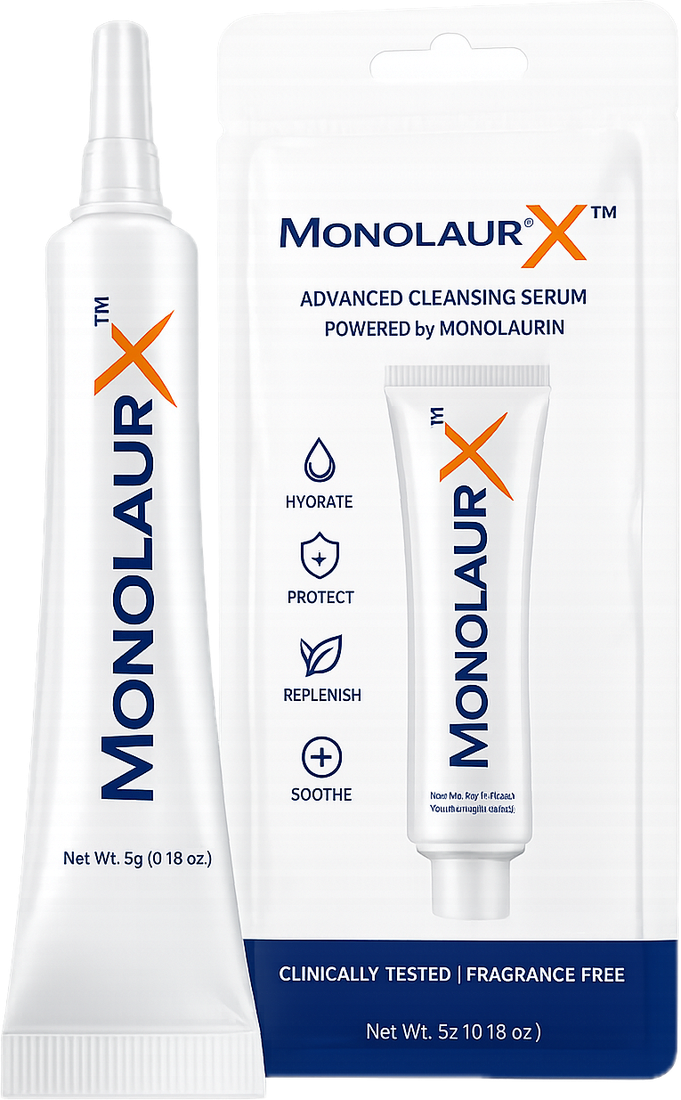
MonolaurX is a gentle, no-rinse lip cleansing serum formulated with glycerol monolaurate, also called monolaurin. It is intended to cleanse around cold sores and refresh the appearance of stressed lips. Cleansing does not make a cold sore noncontagious, and the serum is not an antiviral treatment. Outbreak precautions still matter, even when lip care is part of your routine.
Explore MonolaurX for daily lip cleansing, and keep close-contact precautions in place until a sore fully heals.
References
-
Centers for Disease Control and Prevention. (2024, February 20). About genital herpes. U.S. Department of Health and Human Services. https://www.cdc.gov/herpes/about/index.html
-
Mayo Clinic. (n.d.). Cold sore. In Diseases and conditions. Retrieved October 14, 2026, from https://www.mayoclinic.org/diseases-conditions/cold-sore/symptoms-causes/syc-20371017
-
MedlinePlus. (n.d.). Cold sores. National Library of Medicine. Retrieved October 14, 2026, from https://medlineplus.gov/coldsores.html
-
National Health Service. (2024, February 19). Cold sores. https://www.nhs.uk/conditions/cold-sores/
-
National Health Service. (2025, July 24). Neonatal herpes (herpes in a baby). https://www.nhs.uk/conditions/neonatal-herpes/
-
National Health Service. (2026, September 10). Herpes simplex eye infections. https://www.nhs.uk/conditions/herpes-simplex-eye-infections/
-
Ramchandani, M., Kong, M., Tronstein, E., Selke, S., Mikhaylova, A., Magaret, A., Huang, M. L., Johnston, C., Corey, L., & Wald, A. (2016). Herpes simplex virus type 1 shedding in tears and nasal and oral mucosa of healthy adults. Sexually Transmitted Diseases, 43(12), 756–760. https://doi.org/10.1097/OLQ.0000000000000522
-
The American Academy of Dermatology. (n.d.). Cold sores: Overview. Retrieved October 14, 2026, from https://www.aad.org/public/diseases/a-z/cold-sores-overview
This article is for general education and is not medical advice. MonolaurX is a cosmetic cleansing serum and is not intended to diagnose, treat, cure, or prevent any disease. Talk with a healthcare professional about symptoms or treatment.