What Causes Cold Sores? Every Trigger Explained
What causes cold sores? See how HSV-1, stress, illness, sunlight, hormones, fatigue, and lip irritation can contribute to recurring outbreaks.
MonolaurX Editorial TeamPublished
On this page
Cold sores are caused by the herpes simplex virus (HSV), with HSV-1 responsible for most oral cold sores but they can also be due to HSV-2, which causes genital herpes. After infection, the virus remains dormant in nerve cells and can reactivate later, which is why cold sores may return.
Stress, sunlight, illness, fatigue, hormonal changes, and irritation commonly trigger recurrence, but they are not the underlying cause of the infection. Some people who carry HSV never develop noticeable sores, so understanding the difference between the virus itself and the factors that may trigger an outbreak is key when considering the causes of cold sores.
What Virus Causes Cold Sores?
The herpes simplex virus causes cold sores. HSV-1 causes most oral cold sores, although HSV-2 can also infect the mouth. Once HSV enters the body, it remains there for life, and many people experience only mild symptoms or none at all.
Why Do Cold Sores Keep Coming Back?
Cold sores can return because HSV stays dormant in nerve cells after the initial infection and may reactivate later. Recurrences often appear in the same or a nearby area, although an obvious trigger is not always present. The key distinction is simple:
Cause: HSV infection.
Trigger: A factor associated with HSV reactivation.
What Causes Cold Sores on the Lips?
HSV commonly affects the lips and surrounding skin, especially near the border of the lip. If you’re wondering what causes cold sores on the lips, the virus itself is the underlying cause, while certain factors may contribute to a recurrence.
Common triggers include:
- Sun or wind exposure
- Stress
- Illness or fever
- Fatigue or lack of sleep
- Hormonal changes
- Lip irritation or injury
What Commonly Triggers Cold Sore Recurrences?
Once HSV is present in the body, certain conditions may make a recurrence more likely in some people. Triggers vary from person to person, and an outbreak can also happen without a clear reason.
Sun, Wind, and Weather
Sunlight and wind may trigger cold sore recurrences in some people, particularly when the lips become dry or irritated. Strong sun exposure, cold weather, and windy conditions can also place extra stress on the skin around the lips, which may contribute to an outbreak in someone who already carries HSV.
Stress and Lack of Sleep
Stress and fatigue are commonly associated with HSV reactivation. Poor sleep or periods of ongoing stress may coincide with an outbreak, but they do not cause the original HSV infection. Some people notice a clear pattern, while others do not.
Illness and Fever
Illness and fever can trigger cold sore recurrences in some people, which is one reason cold sores are often called “fever blisters.” The illness itself does not create HSV; it may simply coincide with reactivation of a virus that is already in the body.
Hormonal Changes
Changes in hormone levels may coincide with cold sore outbreaks in some people. Menstrual cycles, pregnancy, and other hormonal shifts are sometimes reported as triggers, although the pattern is not the same for everyone.
Lip Injury, Irritation, or Procedures
Cuts, cracked lips, dental work, cosmetic procedures, and other irritation around the mouth may trigger a recurrence in people who are susceptible. Physical stress on the lip area does not cause HSV infection, but it may be associated with reactivation of the virus.
Do Foods Cause Cold Sores?
Specific foods are not considered an established cause of cold sores, and evidence that individual foods routinely trigger outbreaks is limited. Arginine-rich foods are sometimes blamed because HSV uses the amino acid arginine during replication, but that does not mean eating foods that contain arginine directly causes an outbreak. However, high dose arginine supplements can potentially trigger a cold sore outbreak. Spicy or acidic foods may irritate an existing cold sore or sensitive skin around the mouth, but irritation is different from causing HSV infection.
Can Kissing Cause Cold Sores?
Kissing can spread the herpes simplex virus through close contact with infected skin or saliva. HSV can sometimes be transmitted even when no cold sore is visible, although the risk is higher when blisters or other symptoms are present. Kissing is a way someone can acquire HSV; it is not a trigger that causes an existing infection to reactivate.
What Causes Cold Sores Inside the Mouth?
Cold sores usually appear on or around the lips, but oral HSV can sometimes cause sores inside the mouth, particularly during a first infection. Not every sore inside the mouth is a cold sore, so location and appearance matter when identifying the cause.
Cold Sore vs. Canker Sore
HSV causes cold sores and is contagious, while canker sores are not caused by HSV and cannot spread from person to person. Canker sores typically develop inside the mouth, such as on the inner lips, cheeks, or tongue, while cold sores are more commonly found around the outside of the lips.
How Can You Identify Your Cold Sore Triggers?
If cold sores recur, keeping track of what was happening before each outbreak may help you notice patterns. Consider noting:
- Stress levels
- Sleep and fatigue
- Recent illness or fever
- Sun, wind, or weather exposure
- Menstrual or other hormonal timing
- Lip irritation, injury, or procedures
- Outbreak dates, locations, and recurrence patterns
How Can You Reduce Exposure to Common Triggers?
Cold sore triggers differ from person to person, but a few practical habits may help limit exposure to factors associated with recurrence:
- Protect your lips from excessive sun exposure.
- Maintain consistent sleep habits when possible.
- Manage stress in ways that work for you.
- Minimize unnecessary irritation or injury around the lips.
- Talk with a healthcare professional if outbreaks are frequent or difficult to manage.
Trigger management cannot guarantee a cold sore will not return because HSV can reactivate even without a clear trigger.
How Should You Care for Skin Around a Cold Sore?
A simple, gentle routine can help reduce unnecessary irritation and support good lip-area hygiene while a cold sore is present.
- Avoid picking, scratching, or rubbing the area.
- Wash your hands after touching the cold sore or surrounding skin.
- Keep the surrounding skin clean. The CDC recommends cleaning with soap.
- Avoid sharing lip balms and other personal lip products.
- Use lip-area skincare gently and according to product directions.
Why Does Gentle Cleansing Matter?
Gentle cleansing helps remove surface residue and buildup while keeping the lip area clean without unnecessary rubbing or scrubbing. This can be especially useful when the surrounding skin already feels stressed or sensitive. Cleansing should be viewed as part of a skincare and hygiene routine, not as a way to remove HSV from the body, treat the infection, prevent outbreaks, or shorten healing time.
When Should You See a Healthcare Professional?
Most cold sores resolve without complications, but medical advice may be appropriate if you experience:
- Severe sores or symptoms that do not improve as expected
- Cold sores that return frequently
- Eye pain, irritation, or a gritty feeling in the eyes
- A weakened immune system
- Uncertainty about whether a lesion is actually a cold sore
Eye symptoms deserve prompt medical attention because HSV can sometimes affect the eyes.
Frequently Asked Questions
What is the main cause of cold sores?
Cold sores are caused by herpes simplex virus, most commonly HSV-1.
Why am I suddenly getting cold sores?
HSV can reactivate after stress, illness, sun exposure, fatigue, hormonal changes, or skin irritation, although some outbreaks occur without a clear trigger.
Can stress cause cold sores on the lips?
Stress does not cause HSV infection, but it may trigger the virus to reactivate in someone who already carries it.
What causes cold sores inside the mouth?
Oral HSV can sometimes cause sores inside the mouth, especially during an initial infection, but many sores inside the mouth are canker sores rather than cold sores.
Can you get a cold sore without kissing someone?
Yes. HSV can spread through other forms of close oral or skin contact, and someone may carry the virus without symptoms before eventually developing a cold sore.
Keep Your Lip-Area Routine Gentle With MonolaurX
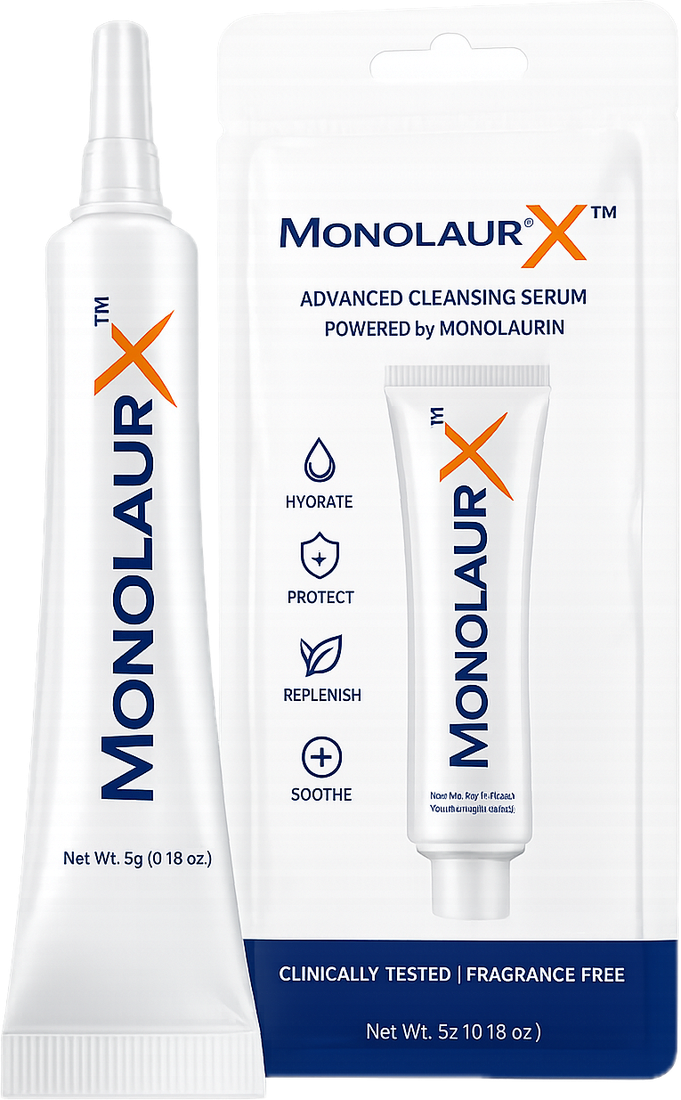
When the skin around a cold sore feels stressed, keeping your routine simple and gentle can make daily care easier. MonolaurX is a topical cleansing serum with monolaurin, designed to cleanse around cold sores and support everyday lip-area hygiene. MonolaurX can even clean the grime on the surface of a cold sore. It fits into a gentle skincare routine for stressed lips and surrounding skin while helping keep the area feeling clean and refreshed. If you’re looking for gentle cleansing, consider trying MonolaurX as directed.
References
- Aslanova, M., Ali, R., & Zito, P. M. (2023). Herpetic gingivostomatitis. In StatPearls. StatPearls Publishing. https://www.ncbi.nlm.nih.gov/books/NBK526068/
- Glick, M. (2002). Clinical aspects of recurrent oral herpes simplex virus infection. Compendium of Continuing Education in Dentistry, 23(7 Suppl 2), 4–8. https://pubmed.ncbi.nlm.nih.gov/12789980/
- Jamgochian, M., Alamgir, M., & Rao, B. (2023). Diet in dermatology: Review of diet’s influence on the conditions of rosacea, hidradenitis suppurativa, herpes labialis, and vitiligo. American Journal of Lifestyle Medicine, 17(1), 152–160. https://doi.org/10.1177/15598276211026592
- National Institute of Dental and Craniofacial Research. (2026, August). Fever blisters & canker sores. National Institutes of Health. https://www.nidcr.nih.gov/health-info/fever-blisters-canker-sores
- Worrall, G. (2009). Herpes labialis. BMJ Clinical Evidence, 2009, 1704. https://pubmed.ncbi.nlm.nih.gov/21726482/
This article is for general education and is not medical advice. MonolaurX is a cosmetic cleansing serum and is not intended to diagnose, treat, cure, or prevent any disease. Talk with a healthcare professional about symptoms or treatment.